Spark Execution Plan Deep Dive: Reading EXPLAIN Like a Pro

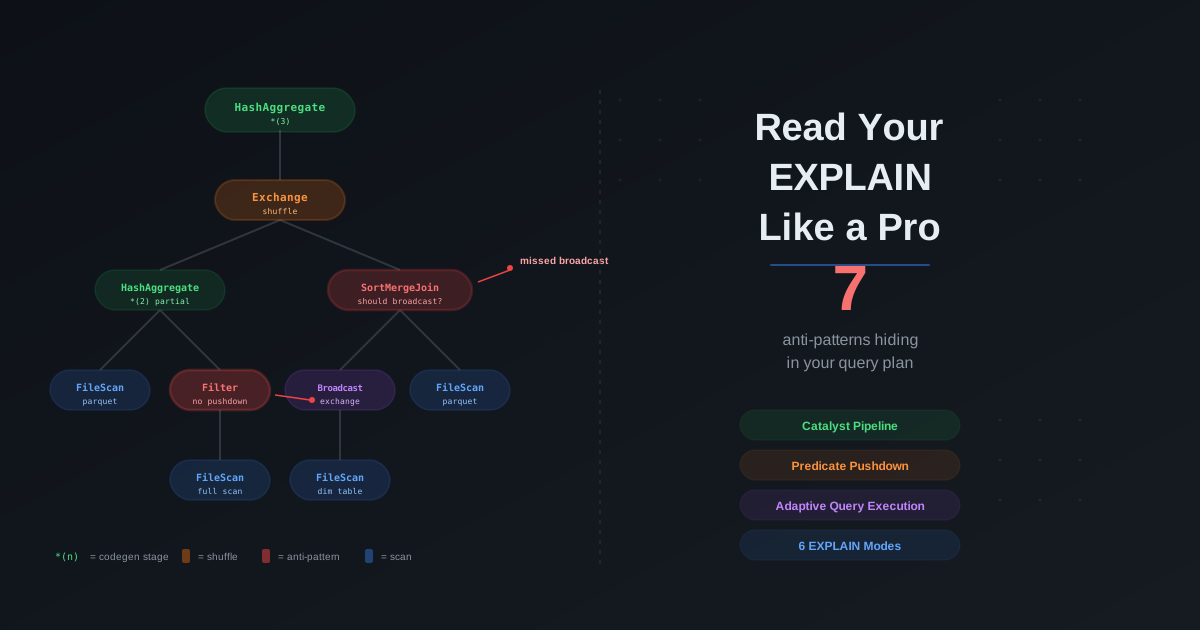
You open the Spark UI after a three-hour job finishes. The SQL tab shows a wall of operators — SortMergeJoin, Exchange hashpartitioning, *(3) HashAggregate, BroadcastExchange HashedRelationBroadcastMode. Your teammate asks why the optimizer did not broadcast the small dimension table. You stare at the plan. You recognize some words. You do not know how to read it.
Every Spark performance guide says "check the execution plan." Every tuning blog says "verify predicate pushdown in the EXPLAIN output." Every debugging guide says "look for unnecessary shuffles." None of them teach you how to actually read the plan from top to bottom — what every operator means, what the asterisk notation is, what the three different filter fields in a FileScan node represent, or how the plan you see before execution differs from the plan that actually runs.
This post is the missing manual. We start with how Spark transforms your code into an execution plan through the Catalyst optimizer pipeline, cover every EXPLAIN mode and when to use each one, walk through every physical plan operator you will encounter, explain whole-stage code generation and what the *(n) notation means, show how to verify predicate pushdown, cover how Adaptive Query Execution rewrites plans at runtime, map EXPLAIN output to the Spark UI, catalog the anti-patterns you can spot in any plan, and finish with a full annotated walkthrough of a real query.